Your hardwood floors have seen better days. Maybe they are scratched and dull, or perhaps water damage has left permanent stains. The question facing many Northwest Arkansas homeowners is whether to refinish what you have or start fresh with new flooring. Here is how to make the right call.
When Refinishing Makes Sense
Refinishing involves sanding down the existing wood surface to remove scratches, stains, and the old finish, then applying new stain and protective coatings. It is typically the better choice when your floors meet certain conditions.
Surface damage only. If your floors have scratches, wear patterns, and dullness but the wood underneath remains structurally sound, refinishing can make them look brand new. Most surface issues that accumulate over years of normal use fall into this category.
Adequate wood thickness. Solid hardwood floors can typically be refinished three to five times over their lifetime, depending on the original thickness. Standard three-quarter inch flooring has plenty of material to sand. If your floors have been refinished multiple times before, a professional can measure the remaining thickness to determine if another refinishing is possible.
Sound subfloor. If the boards are solidly attached and the subfloor underneath is in good condition, refinishing preserves that stable foundation. Squeaks and minor movement can often be addressed during the refinishing process.
Budget considerations. Refinishing typically costs 60-75% less than full replacement. For homeowners working within a budget, refinishing allows you to restore beautiful floors without the expense of new materials and the more extensive labor involved in replacement.
Signs You Should Replace Instead
Some floor conditions go beyond what sanding and refinishing can address. Replacement becomes the better investment when you encounter these issues.
Extensive water damage. Water is hardwood's enemy. If floors have cupped, buckled, or warped from moisture exposure, the damage goes through the entire board. Sanding cannot fix wood that has changed shape. Dark staining that penetrates deep into the wood also indicates moisture damage that refinishing will not eliminate.
Structural problems. Boards that are cracked, split, or broken need replacement. Large gaps between boards that have developed over time suggest the wood has dried and shrunk beyond what refinishing can address. If sections feel soft or spongy when walked on, the wood may be rotted.
Termite or pest damage. Insect damage compromises the structural integrity of flooring. Even if the surface looks acceptable, weakened wood underneath creates problems. Replacement ensures you start with solid, undamaged material.
Previous refinishing limits reached. If your floors have been sanded multiple times, there may not be enough wood thickness remaining for another refinishing. Sanding too thin risks exposing nail heads and creating an uneven surface.
Design changes. Sometimes homeowners want to change the width, species, or style of their flooring. If your narrow strip oak floors do not fit your vision for wide-plank white oak, replacement is the path forward.
The Inspection Process
A professional inspection helps determine which option suits your situation. During an assessment, we examine several factors.
Wood thickness measurement. Using specialized gauges, we measure how much wear layer remains. This determines whether refinishing is possible and how many future refinishings the floor can support.
Moisture testing. We check moisture levels in the wood and subfloor. Elevated readings indicate problems that need to be addressed before any work begins, whether refinishing or replacement.
Structural evaluation. We assess the attachment of boards to the subfloor, check for movement or instability, and identify any areas of concern that could affect the final result.
Damage mapping. We document the location and extent of scratches, stains, dents, and other wear. This helps determine whether the damage is primarily cosmetic or indicates deeper problems.
Cost Comparison
While exact pricing depends on your specific project, understanding the general cost structure helps with planning.
Refinishing includes sanding, staining if desired, and applying new finish coats. It requires professional equipment and expertise but uses your existing wood. The process typically takes two to four days depending on the area size, with additional time for the finish to cure before furniture can be moved back.
Replacement involves removing the old flooring, preparing the subfloor, installing new hardwood, and finishing it. Material costs vary significantly based on the species and grade selected. The installation process takes longer and creates more disruption.
For many Northwest Arkansas homes, refinishing costs roughly one-third to one-half what replacement would cost for the same area. However, if replacement is truly needed, attempting to refinish damaged floors wastes money on a temporary solution.
What About Partial Replacement?
Sometimes the best solution combines both approaches. If most of your flooring is in good condition but one section has significant damage, we can replace just that area and then refinish everything together for a unified appearance.
Partial replacement works well for localized water damage, areas where appliances leaked, or sections damaged by pet accidents. The key is finding matching wood species and having everything sanded and finished at the same time so the repair blends seamlessly.
Matching existing flooring requires expertise. Wood species, board width, and age all affect how well new boards integrate with old. An experienced installer knows how to source appropriate materials and blend the transition.
The Refinishing Process
If refinishing is the right choice, understanding the process helps you prepare. The work progresses through several stages.
Preparation. All furniture must be removed from the work area. We seal off doorways to contain dust and protect other areas of your home. Baseboards may be removed to allow sanding all the way to the walls.
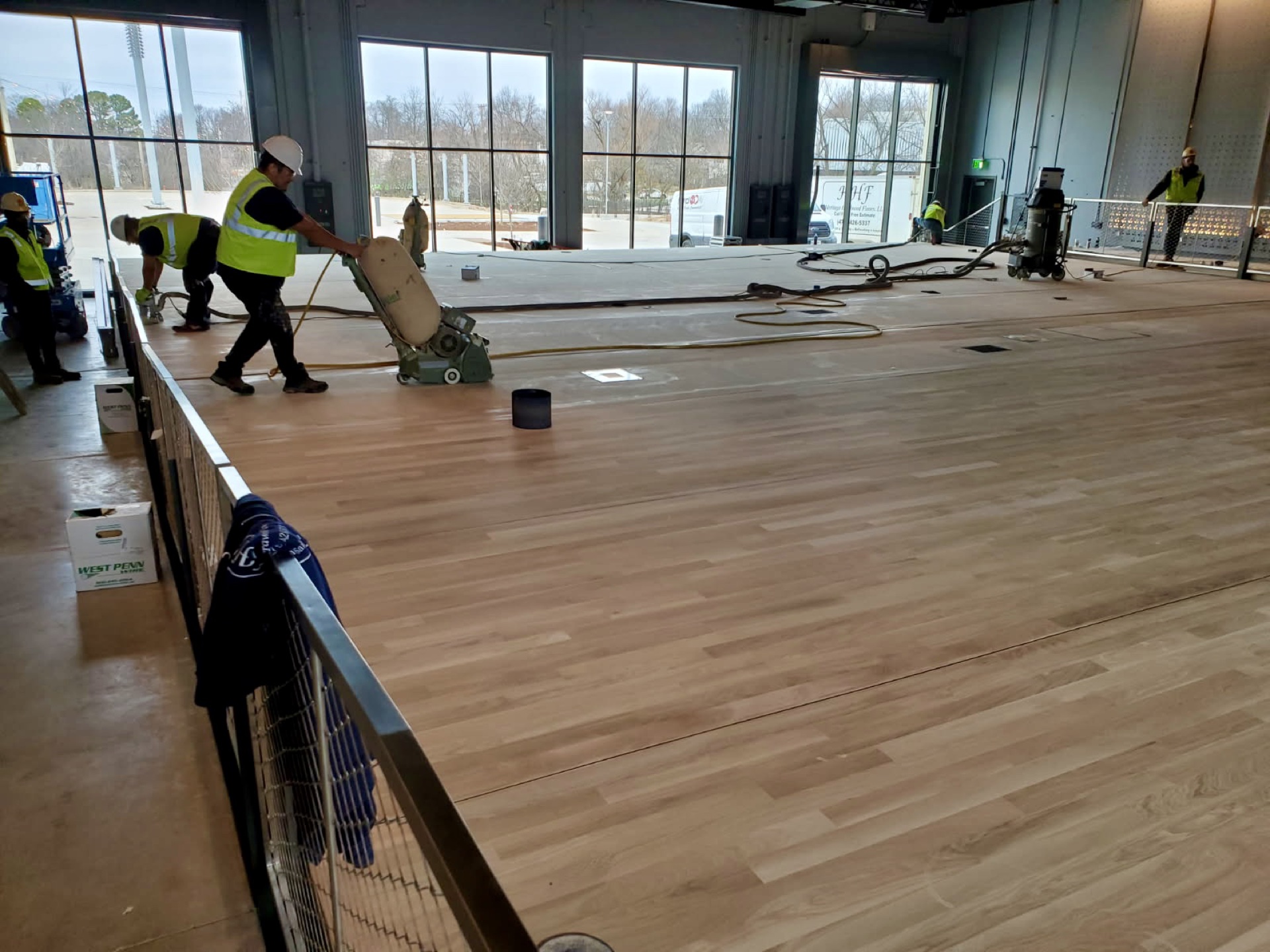
Sanding. We use professional drum and edger sanders to remove the old finish and a thin layer of wood, eliminating scratches and wear. Multiple passes with progressively finer grits create a smooth surface ready for finishing.
Staining. If you want to change the color, stain is applied after sanding and allowed to penetrate the wood. Many homeowners choose to keep the natural wood color or select a stain that enhances the existing tones.
Finishing. Multiple coats of protective finish seal the wood and provide durability. We allow proper drying time between coats for optimal results. The final coat needs additional cure time before the floor can handle normal traffic and furniture.
Making Your Decision
The best approach depends on your specific floors, budget, and goals. An honest assessment from an experienced professional helps you avoid spending money on the wrong solution.
We have seen floors that homeowners assumed needed replacement respond beautifully to refinishing. We have also seen cases where refinishing would have been a waste of money given underlying damage. The inspection process answers these questions definitively.
Not Sure What Your Floors Need?
Schedule a free inspection and get honest guidance on whether refinishing or replacement is right for your situation.
Request Free Inspection