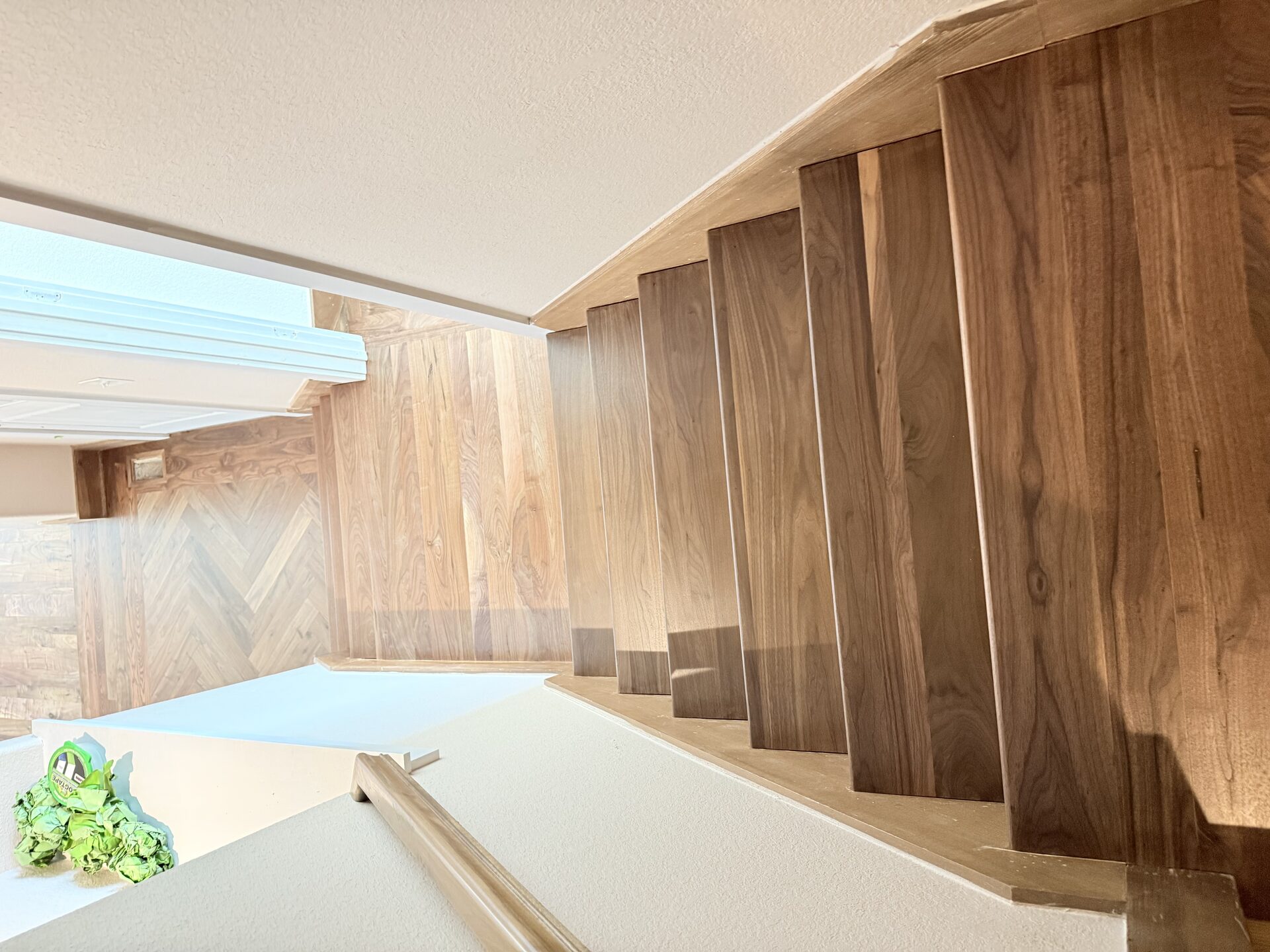
One of the first decisions when selecting hardwood flooring is choosing between solid and engineered construction. Both are real hardwood, both look beautiful, and both can last for generations with proper care. Understanding the differences helps you select the option that performs best in your specific situation.
Understanding the Construction Difference
Solid hardwood is exactly what it sounds like: solid wood throughout the entire thickness of each board, typically three-quarters of an inch. A solid oak board is oak from top to bottom. This traditional construction has been used for centuries.
Engineered hardwood features a real hardwood wear layer bonded to a core of plywood or high-density fiberboard. The wear layer is the same species you would choose in solid form, oak, hickory, walnut, but it sits atop a dimensionally stable base. Quality engineered products have wear layers ranging from 2mm to 6mm or more.
From the surface, properly finished solid and engineered floors look identical. The difference is in how they perform under various conditions.
Stability and Moisture Response
This is the primary technical difference between the two options, and it matters significantly for Northwest Arkansas homes.
Solid hardwood expands and contracts with changes in humidity. Our region experiences humid summers and dry winters, causing wood to absorb and release moisture seasonally. This natural movement is why solid hardwood requires careful acclimation, proper installation with expansion gaps, and consistent indoor humidity control.
In extreme cases or when humidity is poorly controlled, solid floors can cup in summer or develop gaps in winter. These issues are manageable with proper installation and home maintenance but represent an inherent characteristic of solid wood.
Engineered hardwood resists dimensional change much better. The layered construction with alternating grain directions counteracts the wood natural tendency to expand and contract. This stability makes engineered flooring more forgiving in challenging conditions.
Engineered floors perform particularly well over concrete slabs, in basements, and in homes where humidity control is inconsistent. They tolerate temperature and humidity fluctuations that would stress solid hardwood.
Installation Methods
Both products can be installed in multiple ways, but their stability differences affect which methods work best.
Solid hardwood is typically nail-down installed over a wood subfloor. The boards are blind-nailed through the tongue at an angle, securing them while allowing for seasonal movement. Solid hardwood should not be glued directly to concrete and is not suitable for floating installation.
Engineered hardwood offers more flexibility. It can be nail-down installed like solid, glued directly to concrete or plywood, or installed as a floating floor over an underlayment. This versatility makes it the only hardwood option for some installation situations.
For homes with concrete slab foundations, common in many Northwest Arkansas neighborhoods, engineered hardwood is often the practical choice when real hardwood is desired.
Refinishing Potential
Both products can be refinished, but the number of possible refinishings differs based on available wood thickness.
Solid hardwood at three-quarters inch thickness can typically be refinished three to five times over its lifetime. Each refinishing removes a small amount of wood, but there is substantial material available. This longevity potential is one of solid hardwood strongest advantages.
Engineered hardwood refinishing depends on the wear layer thickness. Products with thin veneers (2mm or less) may not be refinishable at all. Premium engineered products with thick wear layers (4mm to 6mm) can be refinished one to three times. Always verify the wear layer thickness when considering engineered options.
If you are choosing engineered flooring, investing in a thicker wear layer provides more long-term flexibility.
Cost Comparison
Pricing varies widely based on species, grade, and quality level, making direct comparisons challenging. However, some general patterns exist.
Material costs for comparable species and grades are often similar between solid and engineered. Premium engineered products with thick wear layers may actually cost more than solid equivalents because of the complex manufacturing process.
Installation costs can favor engineered in some situations. The ability to glue or float engineered floors sometimes reduces labor compared to nail-down solid installation. However, this depends on your specific subfloor and the installer pricing.
Long-term value calculations should consider refinishing potential. Solid hardwood ability to be refinished multiple times extends its practical lifespan, potentially making the cost-per-year lower despite similar upfront prices.
Appearance Options
Both solid and engineered hardwood are available in the full range of species, stains, and finishes. However, engineered construction enables some options that are impractical in solid form.
Wide planks are more stable in engineered construction. Solid boards wider than five inches require special consideration for movement. Engineered products can offer widths of seven inches or more without excessive movement concerns, enabling the dramatic wide-plank looks popular in contemporary design.
Exotic species that would be prohibitively expensive as solid three-quarter inch material become accessible in engineered form with a thinner wear layer. This opens design possibilities while using less of the premium material.
Pre-finished options are common in both categories. Factory-applied finishes are typically more durable than site-applied finishes and allow immediate use after installation.
Climate Considerations for Northwest Arkansas
Our regional climate presents specific challenges for hardwood flooring. Understanding how each type responds helps inform your decision.
Summer humidity in Northwest Arkansas can exceed 70% outdoors. Without air conditioning running consistently, indoor humidity rises and affects flooring. Solid hardwood absorbs this moisture and expands. Engineered hardwood handles humidity fluctuation with less movement.
Winter dryness occurs when heating systems run, dropping indoor humidity significantly. Solid hardwood releases moisture and contracts, potentially causing gaps between boards. Humidification during winter helps control this but requires homeowner diligence.
Concrete slab foundations are common in newer Northwest Arkansas construction. These slabs can transmit ground moisture, making solid hardwood installation problematic. Engineered hardwood with proper moisture barriers performs well in these situations.
Many Northwest Arkansas homes successfully use solid hardwood with proper installation and humidity management. However, engineered products provide a margin of safety in challenging conditions.
Making Your Choice
Consider these factors when deciding between solid and engineered hardwood:
Choose solid hardwood when:
- You have a wood subfloor in good condition
- You maintain consistent indoor humidity year-round
- Maximum refinishing potential is important to you
- Standard plank widths (up to five inches) meet your design goals
- You value the tradition and longevity of solid wood
Choose engineered hardwood when:
- Installing over a concrete slab
- Installing in a basement or below-grade space
- Humidity control is inconsistent or uncertain
- You want wide planks (over five inches)
- A floating or glue-down installation method is preferred
Neither option is universally better. The right choice depends on your home construction, your lifestyle, and your priorities.
Quality Matters More Than Construction Type
A premium engineered product outperforms a low-quality solid floor in every way that matters. Similarly, quality solid hardwood serves generations better than cheap engineered alternatives. Focus on selecting a quality product from a reputable manufacturer rather than simply choosing based on construction type.
Key quality indicators include wear layer thickness for engineered, proper drying and grading for solid, quality finish application, and structural integrity of the boards themselves.
We Install Both Expertly
At Heritage Hardwood Floors NWA, we have extensive experience with both solid and engineered hardwood installation throughout Northwest Arkansas. We can assess your specific situation and help you select the option that will perform best in your home for years to come.
Let Us Help You Choose
Schedule a free consultation and we will assess your home to recommend the best flooring option for your situation.
Schedule Consultation